Nepal’s energy sector faces a series of systemic challenges that obstruct its path toward
sustainable and
inclusive energy access. These include a critical seasonal energy imbalance—where hydropower surplus in
the wet season goes unused while dry seasons cause severe shortages—placing stress on both supply and
infrastructure. The overdependence on run-of-river hydropower further exposes the grid to seasonal
vulnerabilities. Rural and remote areas, especially in hilly regions, continue to suffer from unreliable
electricity due to poor transmission infrastructure, leaving approximately 300,000 people without basic
access. Moreover, the lack of distributed energy resource utilization (such as solar and wind) and the
absence of automated energy-sharing mechanisms prevent efficient redistribution and diversification of
energy across the country.
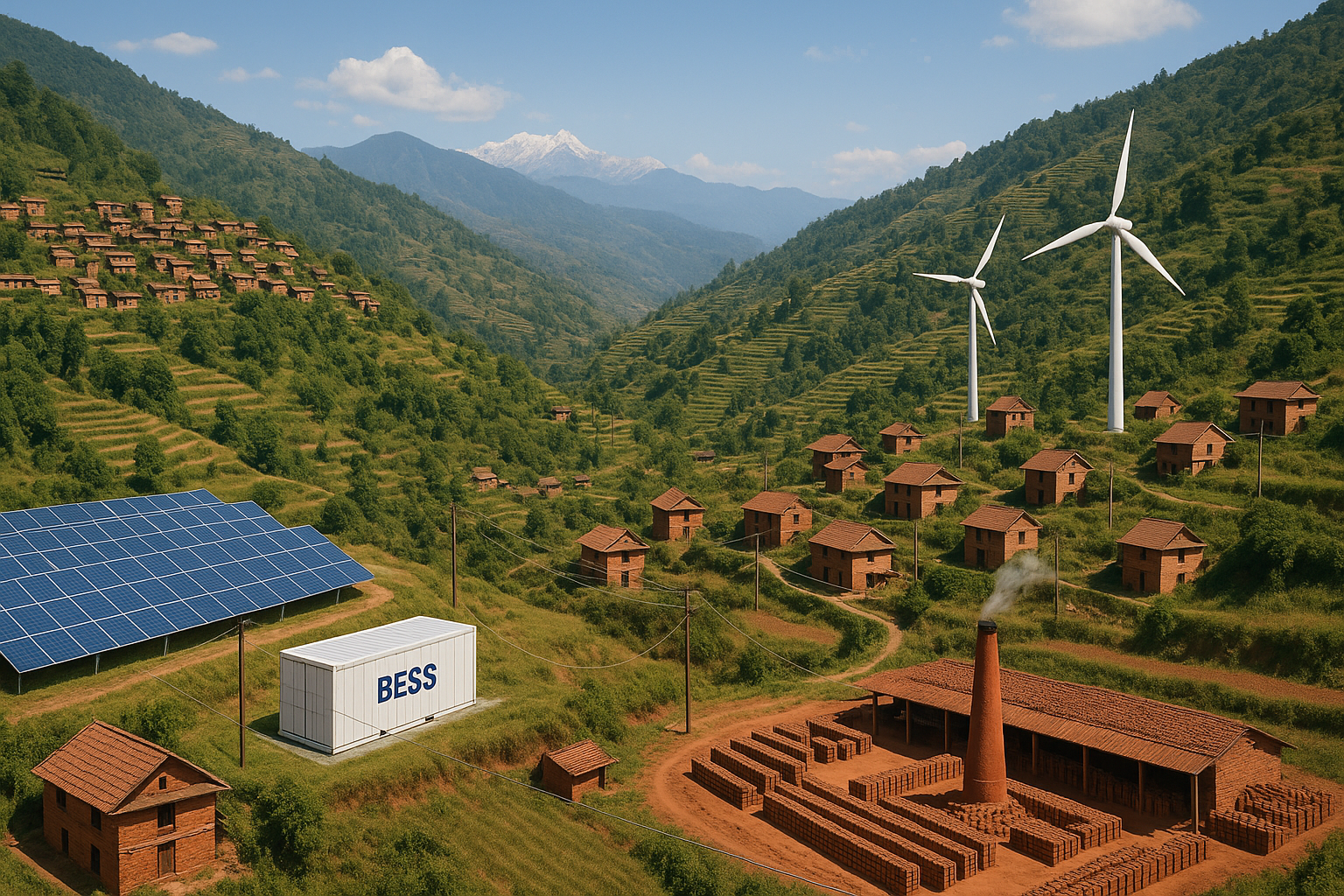
Image Courtesy: Sora AI
Picture: Pragatisheel Smart Energy Ecosystem For Nepal (PSEEN) in Action
To tackle these challenges, the Pragatisheel Smart Energy Ecosystem for Nepal (PSEEN)
proposes a
decentralized, technology-driven energy model combining solar microgrids, community battery storage, and
a digital energy-sharing platform. In urban areas, community batteries will store surplus grid and
rooftop solar energy during off-peak hours for redistribution during peak times, thus alleviating
pressure on the grid. In rural areas, standalone solar microgrids equipped with hybrid inverters and
storage systems will provide consistent electricity. A central platform using IoT, smart contracts, and
energy management systems will automate energy exchange between communities, track consumption, and
ensure efficient settlements. This system allows for seamless integration of surplus energy from one
region into another’s demand, ensuring greater reliability and resilience across the energy landscape.
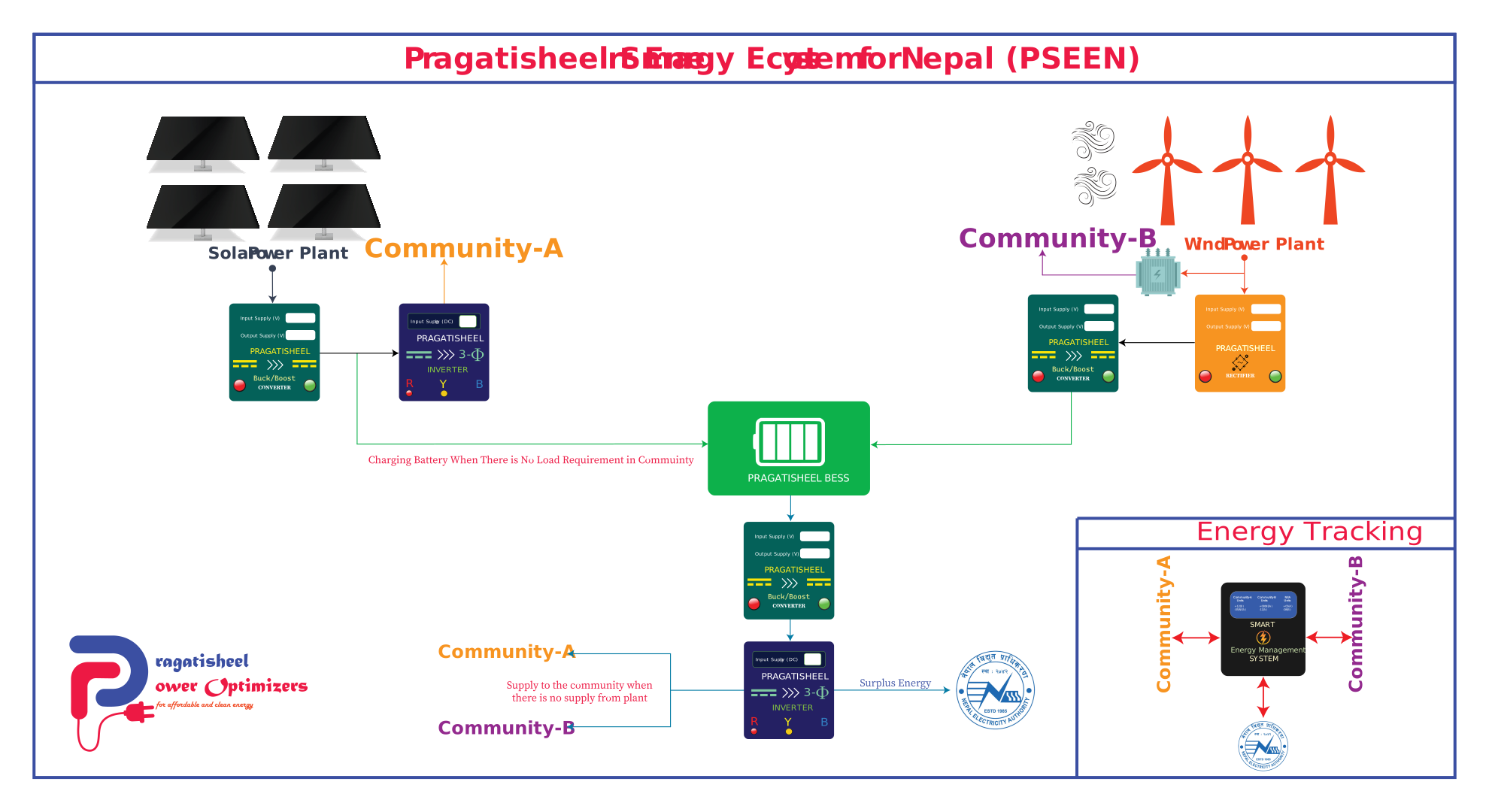
Picture: Pragatisheel Smart Energy Ecosystem For Nepal (PSEEN) Block Diagram
The business model is anchored on sustainability, affordability, and scalability, as
outlined in the
Business Model Canvas. The value proposition focuses on reducing energy wastage, improving grid
resilience, and delivering clean, affordable electricity to underserved communities. Key revenue streams
include energy storage and redistribution charges, platform subscription fees, carbon credit trading,
and equipment leasing with optional maintenance services. The project initially targets urban
residential areas for battery systems and rural communities for microgrid deployment, with the Nepal
Electricity Authority (NEA) as a key energy distribution partner. To execute the model in 200 households
across two communities, the proposed $1 million in funding will be allocated as follows (based on the
pie chart from the PPT): 50% for infrastructure and equipment, 20% for digital platform development, 15%
for marketing and engagement, 10% for research and optimization, and 5% for legal, insurance, and
reserves. Through this integrated approach, PSEEN aims to scale nationwide within 5–7 years and position
Nepal as a leader in sustainable, community-based energy innovation.
Pitching in HULT Prize at IOE Pulchowk, 2024
We pitched our Pragatisheel Smart Energy Ecosysem For Nepal in HULT Prize at IOE Pulchowk, 2024 and were
able to become one of the top 10 finalists.
Technologies To Be Used in the Project
To realize the Pragatisheel Smart Energy Ecosystem for Nepal (PSEEN), a diverse set of modern
technologies will be employed. These technologies enable decentralized energy generation, smart
storage, seamless energy exchange, and real-time system optimization. The integration of renewable
energy with digital tools is critical to ensuring reliability, affordability, and scalability of the
system, particularly in Nepal’s geographically and infrastructurally diverse landscape.
Solar Photovoltaic (PV) Systems: Harness solar energy to
power both urban and rural microgrids, reducing reliance on run-of-river hydropower.
Community Battery Storage: Store excess energy during
off-peak hours for redistribution during peak demand periods, stabilizing supply.
Hybrid Inverters: Manage power flow between solar panels,
batteries, and local loads, enabling efficient energy use and backup support.
Microgrid Infrastructure: Deploy local grids in remote
areas to ensure consistent power supply independent of the national grid.
IoT Sensors and Controllers: Monitor and automate energy
generation, usage, and storage for better system intelligence and performance.
Energy Management Systems (EMS): Track, analyze, and
optimize energy flow across the ecosystem in real time.
Smart Contracts and Blockchain: Facilitate transparent,
automated energy exchanges and settlements between users and communities.
Mobile and Web Applications: Provide users with access to
consumption data, energy credits, and sharing tools via user-friendly interfaces.
Predictive Analytics and AI: Forecast energy demand and
optimize resource allocation using real-time and historical data.
Cloud Integration: Enable centralized control,
scalability, and remote diagnostics of decentralized energy assets.
Implementation in Real-Life Scenario
The Pragatisheel Smart Energy Ecosystem for Nepal (PSEEN) is designed for phased,
real-world deployment, beginning with community-scale pilot projects and scaling to broader
applications across the country. By focusing on both urban and rural energy challenges, the model
integrates solar energy generation, smart storage, and automated energy exchange to ensure
affordability, reliability, and sustainability. A typical implementation would begin in a semi-urban
locality with an unstable grid and a rural village with minimal electrification—allowing the system
to be tested under different infrastructure conditions and user needs. Community participation and
technical training are essential for long-term success, ensuring that the ecosystem is both
self-sustaining and scalable.
Site Selection – Identify two pilot regions (e.g.,
Kathmandu for urban and Simikot for rural) based on energy demand, grid reliability, and
community interest.
Infrastructure Deployment – Install rooftop solar panels
and community battery systems in urban areas; set up solar-powered microgrids with hybrid
inverters and batteries in rural zones.
Platform Launch – Deploy the digital energy-sharing
platform integrated with IoT sensors and smart meters; enable real-time monitoring and control
through cloud-based energy management systems.
Training & Community Engagement – Educate local users on
energy usage, platform access, and maintenance; build local capacity for basic system
troubleshooting and energy literacy.
Smart Contract Integration – Use blockchain-based
contracts for secure, automated energy exchanges and settlements.
Monitoring and Optimization – Continuously gather and
analyze data to optimize energy flow, detect inefficiencies, and plan scale-up.
Feedback Loop – Collect user feedback, adapt system
design, and update platform features for better usability and performance.
Scale and Replicate – Based on performance, expand to
other communities, replicating the model across similar rural and semi-urban environments.
Challenges in Implementation
While the Pragatisheel Smart Energy Ecosystem for Nepal (PSEEN) offers a transformative approach to
solving Nepal's energy distribution and access issues, implementing such a decentralized,
technology-driven system comes with significant obstacles. These challenges range from technical
limitations to social, financial, and regulatory barriers that must be carefully navigated for
successful execution and scaling.
Infrastructure Limitations: Rural and hilly areas often
lack the foundational infrastructure needed for microgrid and battery system deployment.
High Upfront Capital Costs: Despite long-term savings,
the initial investment in solar panels, community batteries, and digital platforms can deter
stakeholders and require substantial financing.
Technical Skill Gaps: There is a shortage of local
expertise in areas like battery maintenance, IoT integration, and smart grid management.
Intermittent Renewable Energy Supply: Solar and wind
resources are variable, requiring robust storage and smart management systems that are
technically complex and costly.
Regulatory and Policy Hurdles: Nepal’s current energy
regulations may not fully support decentralized energy trading and smart contracts.
Community Engagement and Adoption: Securing buy-in from
local communities, especially in rural areas, requires education, trust-building, and ongoing
support.
Maintenance and Sustainability: Ensuring reliable,
long-term operation of equipment in remote areas is logistically and financially challenging.
Data Management and Cybersecurity: The digital platform
and smart contracts demand secure data handling, posing risks if proper cybersecurity measures
aren't in place.
Grid Integration Compatibility: Integrating community
energy systems with the national grid without causing instability or interference requires
advanced load flow analysis and cooperation with NEA.
Monetization and Revenue Collection: Implementing and
managing energy credits, billing, and collection across decentralized communities can be
operationally complex.
Future Improvements
As the Pragatisheel Smart Energy Ecosystem for Nepal (PSEEN) grows and adapts, continuous innovation
and improvement will be crucial to ensure long-term success, scalability, and resilience. With
emerging technologies and evolving user needs, the ecosystem must be designed for flexibility and
upgradability. Future improvements will focus on enhancing system intelligence, expanding access,
and increasing efficiency to better serve Nepal's energy needs and set an example for similar
developing nations.
Integration of AI for Load Forecasting: Implement
artificial intelligence to predict energy demand and generation patterns, enabling better load
balancing and grid reliability.
Advanced Battery Technologies: Transition to
higher-efficiency, longer-lifespan storage systems like lithium iron phosphate or solid-state
batteries for improved performance.
Grid-Interactive Smart Homes: Equip households with smart
appliances and automated control systems to participate actively in energy optimization.
Expansion to EV Charging Infrastructure: Introduce
solar-powered EV charging stations within communities to support clean transportation growth.
AI-Based Fault Detection and Maintenance: Use machine
learning models to predict system failures and automate diagnostics for preventive maintenance.
Cross-Border Energy Sharing Models: Explore partnerships
with neighboring regions or countries for energy trade, increasing system resilience and market
reach.
Dynamic Pricing Algorithms: Develop smart pricing models
that adjust in real time based on demand and availability, ensuring fairness and efficiency.
Carbon Tracking and Reporting Tools: Add capabilities to
monitor, report, and monetize carbon savings for participation in international carbon credit
markets.
Scalable Modular Design: Design system components to be
plug-and-play for easier replication in other regions without major redesign.
Enhanced User Interfaces: Improve mobile and web
platforms for better user engagement, accessibility, and education on energy usage patterns.